

Modern care doesn't work in isolation. The strongest outcomes happen when home care providers, the NHS, and community services work together as one system around the person.
This collaboration is what turns reactive care into proactive support. It reduces delays, prevents gaps, and ensures people receive the right help at the right time.
Why collaboration matters in modern care
The NHS is built to treat medical conditions. Community services and home care providers focus on daily living support, recovery, and long-term wellbeing.
When these systems don't communicate properly, people fall through the cracks:
- Hospital discharge gets delayed
- Medication changes are missed at home
- Follow-up care is inconsistent
- Families are left to coordinate everything
Working together solves this. It connects clinical care with everyday support.
In the UK, integrated care systems (ICS) were introduced to improve exactly this problem—bringing NHS trusts, local authorities, and community providers into shared planning and delivery.
What "working alongside the NHS" actually means
It's not just a partnership on paper. It's practical coordination.
Home care providers often work with NHS teams to:
- Support hospital discharge plans
- Follow clinical instructions after treatment
- Report changes in patient condition
- Assist with medication management
- Share updates with GPs or district nurses
This creates a continuous loop of information between hospital, home, and community care.
Supporting safe hospital discharge
One of the most critical collaboration points is discharge from hospital.
Without proper support, patients risk:
- Readmission within days or weeks
- Medication errors
- Falls or complications at home
- Confusion around aftercare instructions
Care providers working with NHS discharge teams ensure:
- Care starts immediately after discharge
- Equipment is ready at home
- Care plans match hospital instructions
- Family members understand ongoing needs
This transition phase is where joined-up care makes the biggest difference.
The role of community services
Community services fill the gap between medical treatment and daily life.
They include:
- District nursing teams
- Physiotherapy and rehabilitation services
- Mental health support services
- Social prescribing link workers
- Local authority adult social care teams
When home care providers coordinate with these services, the support becomes more complete.
For example:
- A physiotherapist may design mobility exercises
- A caregiver helps the patient do them daily at home
- A district nurse monitors progress weekly
That shared responsibility improves recovery speed and independence.
Communication: the backbone of effective care
Good collaboration depends on one thing: communication.
In strong systems, information flows quickly and clearly:
- Care notes are shared with relevant NHS teams
- Changes in condition are escalated early
- Families are kept informed
- Care plans are updated in real time
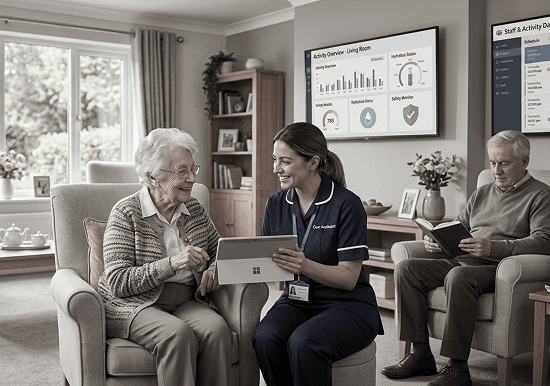
Many providers now use digital care platforms to reduce delays and improve transparency between services.
This reduces confusion and ensures everyone is working from the same information.
Benefits for patients and families
When NHS and community services work alongside home care providers, the impact is direct:
- Faster access to treatment and support
- Reduced hospital readmissions
- Safer recovery at home
- Less pressure on family carers
- Better continuity of care
Most importantly, it creates stability. People don't have to repeat their story to multiple professionals or manage everything alone.
Challenges in coordination
Even with progress, challenges still exist:
- Different systems and software
- Delays in communication between services
- Capacity pressures in NHS teams
- Regional variation in service availability
This is why structured care coordination and clear protocols are essential. Without them, even good intentions can lead to gaps.
The future: more integrated, more digital
The direction of care in the UK is clear: integration.
We're seeing growth in:
- Shared digital care records
- Real-time updates between providers
- AI-supported care coordination tools
- Stronger NHS-community partnerships
- Preventative care models instead of reactive treatment
The goal is simple: one connected care system around each person, not separate services working in isolation.
Final thoughts
Working alongside NHS and community services is not optional anymore—it's essential.
When care is connected, people recover faster, stay safer at home, and experience fewer crises. It also reduces pressure on hospitals and supports long-term sustainability of the health system.
The real value is simple: better coordination leads to better lives.